
What Is Form 25A – Divorce Order?
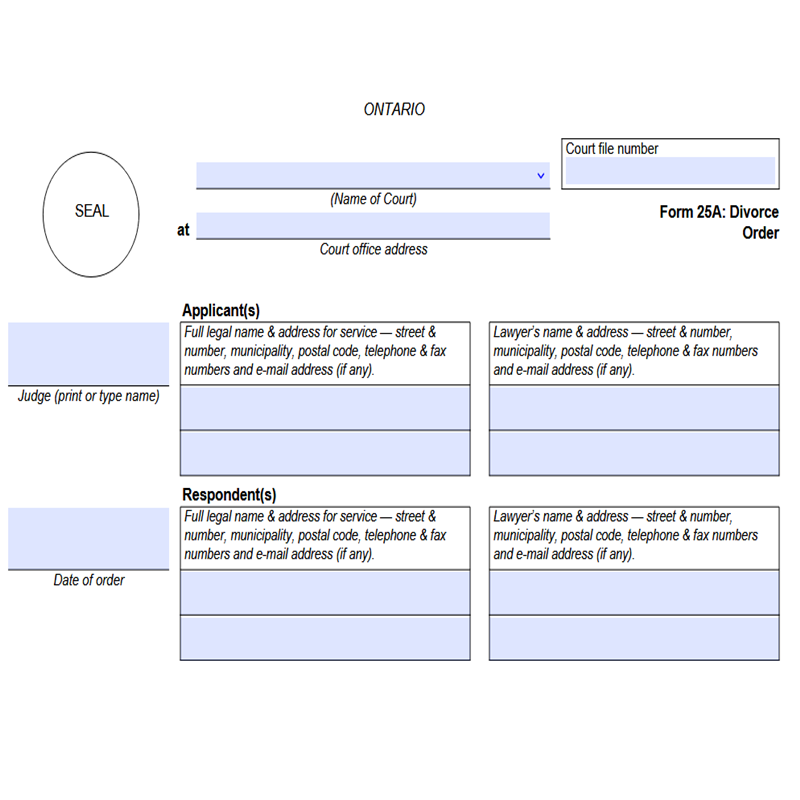
Form 25A is the official Divorce Order issued by the Ontario court after a divorce has been approved. Form 25A serves as the court’s final confirmation that a divorce has been granted. Its legal purpose is to:
- Formally dissolve the marriage under the Divorce Act (Canada)
- Confirm that the court has reviewed and accepted the divorce application
- Establish the official date on which the divorce takes legal effect
- Provide enforceable proof of divorce for legal, financial, and personal matters
When the Court Issues a Divorce Order
The Ontario court issues Form 25A only after all required steps in the divorce process have been completed. This typically happens:
- After a sole or joint divorce application has been approved
- Once all required documents (such as Form 8A and Form 36) have been reviewed
- When the court is satisfied that:
- The marriage breakdown meets legal requirements
- Child support arrangements comply with federal guidelines (if applicable)
- There are no outstanding procedural issues
In most uncontested divorces, the Divorce Order is issued without a court appearance. Once granted, there is a 31-day waiting period before the divorce becomes final. After this waiting period, the Divorce Order takes full legal effect.
What Information Is Included in the Divorce Order
Form 25A is a concise but legally significant document. It typically includes:
- The names of both spouses as they appear in court records
- The court file number
- The court location where the divorce was granted
- The date the Divorce Order was issued
- The date the divorce becomes final (after the 31-day appeal period)
- Confirmation that the divorce was granted under the Divorce Act
- The judge’s authorization or court seal
What Does Form 25A Legally Do?
Officially Dissolves the Marriage
The primary legal function of Form 25A is to formally dissolve the marriage under the Divorce Act (Canada). Once the Divorce Order is issued, the court has legally approved the divorce. This confirms that the marriage has ended in the eyes of the law, subject only to the mandatory waiting period.
Sets the Date the Divorce Is Granted
Form 25A clearly states the date the divorce is granted by the court. This date is important because it:
- Establishes when the court approved the divorce
- Starts the statutory appeal period
- Determines when certain post-divorce rights and obligations begin
Triggers the Waiting Period Before Remarriage
Once Form 25A is issued, a 31-day waiting period automatically begins. During this time:
- Either spouse may appeal the Divorce Order
- Neither spouse is legally permitted to remarry
- The divorce is not yet considered final
Do You Need a Lawyer After Receiving Form 25A?
When Legal Advice May Still Be Helpful
Even after a Divorce Order is issued, legal advice may be useful if:
- You are unsure whether the divorce has become final or whether the 31-day waiting period has ended
- You plan to remarry and need confirmation of the correct documents
- There are unresolved or unclear issues related to child support, spousal support, or parenting arrangements
- You are dealing with cross-border issues, such as remarriage or immigration outside Canada
- You need guidance on enforcing or changing existing court orders
A short consultation with a family lawyer can help confirm that all legal steps have been properly completed and that no issues remain outstanding.
Reviewing Post-Divorce Obligations
Form 25A ends the marriage, but it does not cancel or replace other legal obligations. After a divorce is granted, it is important to review:
- Ongoing child support or spousal support obligations
- Parenting schedules and decision-making arrangements
- Any court orders made during the divorce process
- Financial disclosure or enforcement issues
Click here to download Form 25A.

Numan Bajwa is the Founding Partner at Bluetown Law – Family Lawyers. He earned his Juris Doctor from the University of Detroit Mercy School of Law (2011–2014) and holds an Honours degree in Criminology from the University of Windsor (2003–2008).