

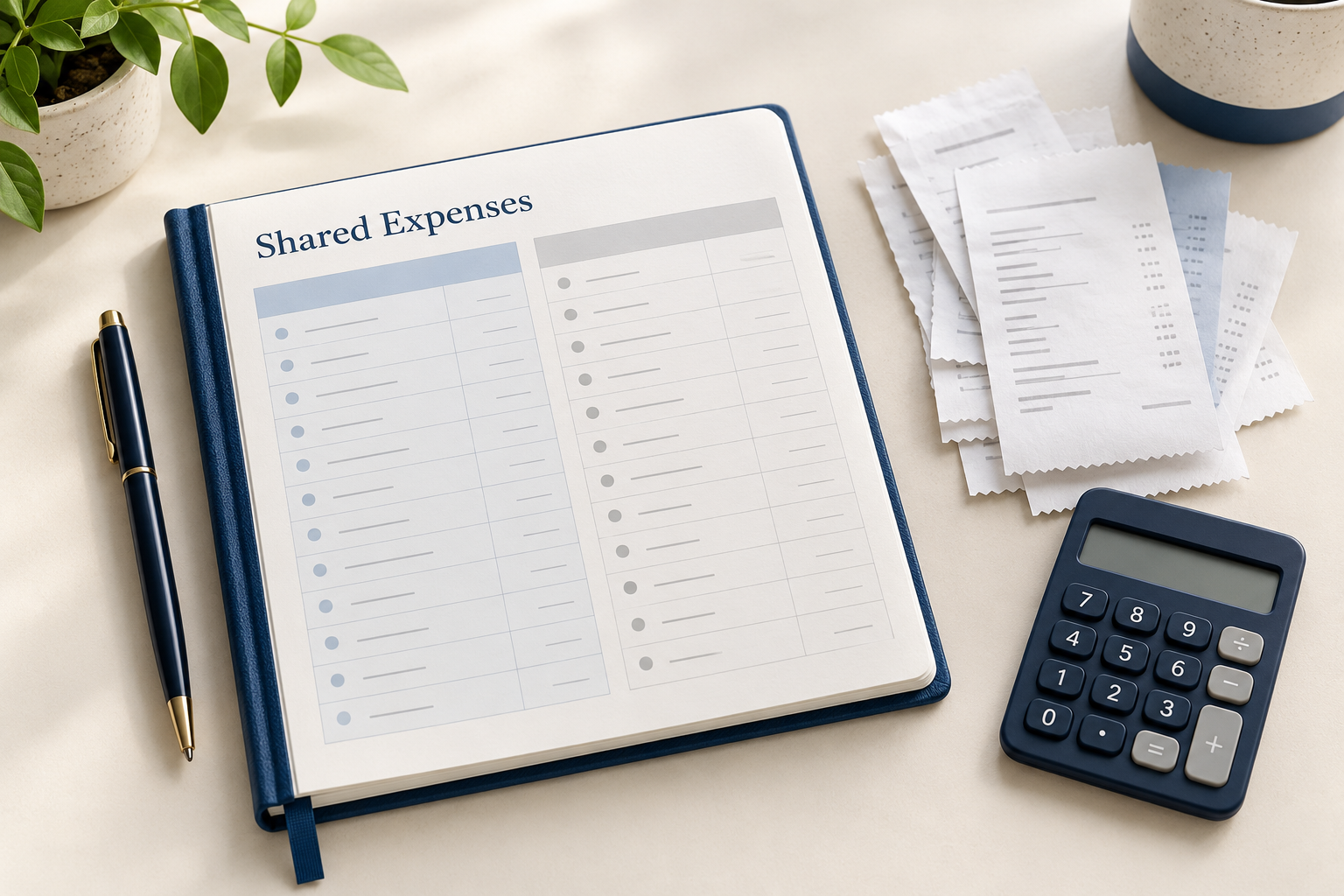
Why Should You Track Shared Expenses During Separation?
Keeping track of joint expenses while living apart would lead to fewer disagreements and would also give a better account of the money spent by either individual.
Without any kind of accounting system for these expenses, couples might find that after a certain amount of time passes, there are discrepancies regarding which individual paid which expense.
Separation Agreement Negotiations
Expenses records will demonstrate how household and family expenses have been managed after the separation.
For instance, one of the spouses might have been paying the mortgage while the other paid for groceries or utilities. It will become easier to determine the real picture from the records as opposed to estimates.
This information could prove useful as spouses discuss how future expenses will be managed.
It does not necessarily imply that all expenses will be repaid or credited. This will depend on the circumstances at hand.
Financial Disclosure
An expense tracker can complement broader financial disclosure by helping organize supporting records.
Documents may include:
- Bank statements
- Credit card statements
- Mortgage statements
- Utility bills
- Insurance documents
- Childcare invoices
- Medical receipts
- Relevant tax records
An expense spreadsheet does not replace formal financial disclosure where disclosure is required.
Instead, it can make financial records easier to understand and help identify documents that may need to be reviewed.
Household Budgeting
Separation often changes household finances.
One person may move out while certain joint expenses continue. Other couples may remain in the same home temporarily but begin managing money separately.
Tracking expenses can help both spouses see:
- Which bills remain shared
- Which payments are recurring
- Who is currently paying each bill
- Whether reimbursements are being made
- Whether an amount remains outstanding
This can make short-term budgeting more practical while longer-term financial issues are being resolved.
Parenting Expense Discussions
Parents who are separated may need to track the expenses of their children.
These could consist of things such as child care expenses, schooling, medical and dental expenses, travel expenses, or additional educational expenses.
It would be easier to differentiate regular parenting expenses from those which need to be talked about separately by maintaining proper records. All child-related expenses are not automatically regarded as extraordinary expenses under Section 7 of the Federal Child Support Guidelines.
Property-Related Expenses
Payments connected to a jointly owned home or other property can also become important after separation.
Examples include:
- Mortgage payments
- Property taxes
- Home insurance
- Repairs
- Maintenance
- Utilities
The record might prove the date of the payment, who has made the payment and what for. This information could be useful if some property-related matters arise, but the payment itself doesn’t establish any ownership rights.
Avoiding Disputes about Who Paid What
Minor disputes can prove to be hard to resolve when the documentation is not adequate.
In such a case, for instance, one of the parties may claim that he or she paid the cost for repair whereas the other feels it was paid off months ago.
A documented account based on the invoice and the online transfer details will provide clarity in this respect.
The objective is not to complicate divorce proceedings with bookkeeping.
Providing Information to a Lawyer or Mediator
Organized records can also help a lawyer or mediator understand the financial situation more efficiently.
Instead of reviewing scattered receipts and payment messages, they can see:
- The type of expense
- The amount
- The payment date
- Who paid
- Any reimbursement
- Whether the expense is disputed
This may help focus discussions on the issues that actually require legal or financial attention.
Can Expense Records Affect Separation Agreement Negotiations?
Yes. Expense records could assist in understanding the payment history and determine which amounts are in dispute during the separation agreement discussions.
For instance, the expense records could indicate that one spouse paid some household expenses after the separation or that the couple had some informal agreement about sharing children expenses.
The above information would be very helpful.
However, expense records do not automatically determine:
- Who is legally responsible for an expense
- Whether reimbursement must be paid
- Child or spousal support
- Property division
- Ownership rights
Which Shared Expenses Should You Track?
Separated partners need to document the costs that pertain to the family, the joint assets, children, and any other commitments that would link both individuals.
This helps make a distinction between the personal and shared expenditures.
Household Expenses
Household expenses may continue even after a couple separates.
Common examples include:
- Mortgage or rent
- Property taxes
- Home insurance
- Electricity
- Gas
- Water
- Internet
- Shared phone costs
- Groceries
- Home repairs
- Maintenance expenses
In case the couple stays together in the same house after divorce, many of these expenses will continue more or less like before.
In case one spouse leaves the house, things might get complicated.
One spouse might continue to pay the mortgage while another pays for utilities or taxes. It might depend on the arrangement between the couple and the legal situation.
When recording a household expense, note:
- What was paid
- The total amount
- Who paid it
- Whether the expense was agreed upon
- Whether the other spouse contributed
- Whether any amount remains outstanding
This creates a factual record without assuming that every cost must be divided equally.
Child-Related Expenses
Parents should also keep clear records of expenses connected to their children.
Examples may include:
- Childcare
- School expenses
- Medical expenses
- Dental expenses
- Prescription costs
- Extracurricular activities
- Transportation
- Sports or activity fees
- Other parenting-related costs
It is necessary to differentiate between various forms of expenditures related to children.
Common or regular expenses might differ in their treatment from possible Section 7 extra or special expenditures.
For instance, an expenditure on school books is not automatically recognized as a Section 7 expense.
Likewise, expenditures related to a medical procedure or to some form of child care do not have to be treated the same just because they relate to children.
Parents can make record-keeping easier by noting:
- The child’s name
- The date
- What the expense was for
- The total cost
- Who paid
- Whether the cost was discussed in advance
- Any amount reimbursed
- The outstanding amount, if any
Supporting receipts or invoices should also be saved where available.
Property Expenses
Property-related expenses can be especially important when spouses continue to own a home together after separation.
These may include:
- Mortgage payments
- Property taxes
- Home insurance
- Necessary repairs
- Maintenance
- Condominium fees
- Utilities connected to the property
Now assume that one of the spouses is responsible for the emergency fix on the furnace after separation.
This needs to be documented with respect to the day when this occurred, the cost, the receipt from the contractor, who paid and was the fix planned before hand.
Does this settle the issue of contribution of the other party?
No but it surely leaves no doubt on anything.
Personal Expenses
Personal spending should usually be tracked separately from shared expenses.
Examples may include:
- Personal clothing
- Individual subscriptions
- Personal entertainment
- Individual transportation costs
- Personal credit card purchases
- Expenses unrelated to the household or children
Separating personal expenses from shared expenses can prevent a spreadsheet from becoming confusing.
It also helps identify which payments may genuinely require discussion between the spouses.
Should Personal Spending Be Tracked Separately From Shared Expenses?
Yes. Keeping personal and shared expenses in separate categories can make financial records easier to review and reduce disagreements about which costs actually involved both spouses.
A simple category system may include:
- Household
- Children
- Property
- Personal
- Other
The categories themselves are not crucial as long as they are consistent.
An orderly accounting record must be structured in such a way that it is easy to comprehend the whole financial history without referring back to each receipt.
What Is the Best Way to Record Shared Expenses?
The best way is to stick to just one expense sheet which would require constant updating.
It doesn’t have to be a complex system. Just a spreadsheet, sharing expense tracker or digital file might do the job if the information would be consistent.
The main thing is to be able to prove what was spent, when it was spent, by whom, and whether any reimbursement happened.
A practical process is:
- Create one central expense log.
- Record the date of each expense.
- Describe what the expense was for.
- Assign a category.
- Record the total amount.
- Identify who paid.
- Record the proposed shared amount, where applicable.
- Note any reimbursement already made.
- Calculate any outstanding balance.
- Save the supporting receipt or document.
- Add a note if the expense is disputed.
- Update the record regularly.
For instance, an entry for the $600 payment of childcare may include such details as the date, the childcare center, the total cost, who made the payment, the amount expected to be contributed by each parent, and any reimbursement. The document needs to describe what took place and cannot assume that a certain percent is mandated.
What Information Should an Expense Tracker Include?
A simple expense tracker can include these columns:
| Information | What to Record |
|---|---|
| Date | When the expense was paid |
| Expense | What the payment covered |
| Category | Household, child, property, personal, or other |
| Total Amount | Full amount paid |
| Paid By | Which spouse made the payment |
| Proposed Shared Amount | Amount proposed for sharing, if applicable |
| Amount Reimbursed | Any repayment already received |
| Balance Outstanding | Amount still being discussed |
| Receipt Saved | Whether supporting documentation is available |
| Notes | Agreement, dispute, or additional explanation |
Keeping these details together can make it easier to review several months of separation expenses.
How Should You Handle Disagreements About Shared Expenses?
When spouses disagree about an expense, the first step is to document the facts rather than assume how the issue should be resolved.
Common disagreements include:
- Whether the expense was necessary
- Whether both spouses agreed to it
- Whether it should be shared
- What percentage each person should pay
- Whether reimbursement is required
- Whether a child-related expense is reasonable
- Whether a home repair was necessary
- Whether an expense should still be shared after one spouse moved out
Good records can make these discussions more focused.
Keep Agreed and Disputed Expenses Separate
Do not mix every expense into one unresolved balance.
Instead, identify which expenses are:
- Agreed
- Reimbursed
- Partially reimbursed
- Disputed
- Still being reviewed
For example, both spouses may agree that a utility bill was a shared expense but disagree about a home renovation.
Those two items should not be treated in the same way.
Separating disputed expenses makes it easier to identify the issues that actually require negotiation.
Confirm Significant Expenses in Writing
Where practical, significant expenses should be discussed in writing before they are incurred.
This may be particularly helpful for:
- Major home repairs
- Expensive children’s activities
- Private school costs
- Significant medical or dental treatment
- Large property expenses
- Other unusual costs
A short email or message can create a record showing what was proposed and whether the other spouse agreed.
That can be more reliable than trying to remember a conversation months later.
Do Not Assume Every Expense Must Be Split 50/50
A common record-keeping mistake is entering half of every expense as automatically owing from the other spouse.
That may not reflect the actual legal position.
Responsibility may depend on factors such as:
- An existing separation agreement
- A court order
- Ownership
- Income
- Parenting arrangements
- The nature of the expense
- Whether the expense was agreed upon
- Applicable Ontario family law
The expense tracker can show a proposed contribution, but it should not be presented as proof that the amount is legally owed.
Avoid Relying Only on Memory
Expense disagreements can become harder to resolve when neither person has documentation.
Instead of relying on statements such as “I paid most of the bills,” it is more useful to have specific entries supported by documents.
For example:
- Mortgage — $2,100 — paid June 1
- Childcare — $950 — paid June 4
- Property insurance — $180 — paid June 10
Specific records provide a clearer financial history.
They may also help a lawyer or mediator understand the issue without having to reconstruct every transaction from scratch.
What If One Spouse Is Paying Most of the Expenses?
If one spouse is covering most household or child-related expenses, those payments should be carefully documented.
The record can show:
- Which expenses were paid
- The amount
- How frequently the payments occurred
- Whether the other spouse contributed
- Whether reimbursement was discussed
- Whether any amount was later repaid
This information may be relevant during separation agreement negotiations.
However, paying more does not automatically mean that the spouse is entitled to reimbursement.